For the first nine years of school, junior Daniel Vish walked through the doors of Community Montessori each morning, but at the start of ninth grade, all of that changed.
Vish said, “No doubt,” he is glad he switched.
“Sometimes I miss [ Community Montessori ] because it was like easier, but that’s it,” Vish said. “I kinda wish I switched sooner. I wish academically, I switched earlier.”
Vish said his freshman year, he had to play “catch-up” to get back to grade-level learning. He said everything was good up until middle school.
The Montessori philosophy is a child-centered, individualized approach to education that respects the child’s innate potential for learning and self-construction, according to The American Montessori Society. 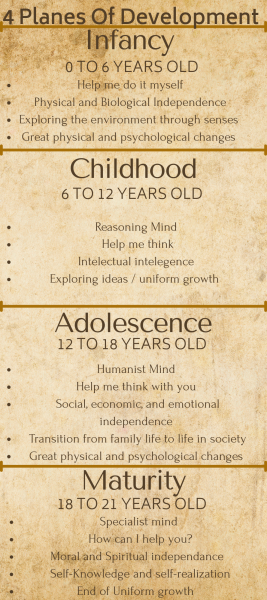
“I feel like [ Community Montessori’s ] style was not teaching, [it was ] like giving us work and not telling us anything,” Vish said. “I’d say the biggest changes, though, are just like you aren’t spending the whole day or like all day with the same people. I like actually going to multiple classes a day and have more like wide variety of what I learn.”
If Vish could take one thing from NAHS to Community Montessori, he says he would take how the class structure is set up in public school and put it in Montessori. The Montessori principles include a prepared environment with special materials, hands-on learning, fostering independence and self-discipline, and a teacher acting as a guide, according to The American Montessori Society.
Vish says transferring to NAHS helped with his social skills.
“ I switched schools partly because my parents made me, but like I would have switched on my own because I felt like the high school there kinda sucked,” Vish said. “ I knew a lot of people there and kinda like goofed off the entire day. I’m not trying to do that for high school, I’m trying to actually learn.“
Vish says he has met new people at NAHS and likes many of the teachers and students. When talking to strangers, he said, it’s gotten easier, and he feels a lot more confident when talking to them or people he hasn’t seen for a while.
Worldwide, there are approximately 15,000 Montessori schools, with around 3,500 in the United States. Freshman Vada Taylor also attended Community Montessori.
“[NAHS] is definitely better and has a lot more structure than Montessori has,” Taylor said. “After middle school, it’s terrible. There definitely is a learning change; mainly the math [was bad], but the language they taught was really good.”
Taylor said her family felt that Montessori just wasn’t a good fit after going from preschool to eighth grade.
“The biggest thing I would say to someone who didn’t go to Montessori was that it was good, until it wasn’t,” Taylor said.
The first Montessori school, called Casa dei Bambini (Children’s House), was opened on January 6, 1907, in Rome, Italy, by Maria Montessori. The first Montessori school in the United States was established in the fall of 1911 in Scarborough, New York.
Sophomore Mallory Warren spent her earlier years at Community Montessori and other public schools before coming to NAHS as a freshman.
Warren says Montessori “fell off.”
“I switched schools because me and my mom both agreed that like I wasn’t getting a good enough education,” Warren said. “Math has always been a big struggle for me. I feel like the teachers they really didn’t know what they were teaching.”
Warren attended Community Montessori for four years. Warren said it was hard at first changing to NAHS because of the size and trying to catch up to grade-level learning. To help fill in the gaps, she goes to tutoring and takes math labs at NAHS.
“At first, I’m not gonna lie, I had a rough time,” Warren said. “I had no friends or anything, and I just wanted to go back to Montessori.”
Next semester, Warren is going to take Psychology, which is not offered at Community Montessori. Warren said that she has so many more opportunities now that she’s at NAHS.
“It was a really big change,” Warren said. “Honestly… the size [of NAHS], the size is crazy. Montessori is very small compared to what we have here.”
The total number of students at Community Montessori is 486, infants through 18-year-olds, according to the National Center for Education Statistics.
“I think NAHS is such a great place to be,” Warren said. “I prefer this way, I feel like I’m learning better.”
From a teacher’s perspective
While students have their views of education, teachers can offer a different perspective. Science teacher Ms. Gail Case says Montessori kids are very curious. She taught at Hazelwood Middle School before coming to NAHS.
“Honestly, some of my favorite kids that I have or had came from the Montessori school that I was lucky enough to have in class, “ Ms. Case said. “The Montessori kids I have met and interacted with are some of my favorite people in the world.”
Ms. Case has sent all her kids to NAHS, and she said it is one of the best options around.
“I’m very impressed with the education and what they offer here,” Ms. Case said. “I think New Albany has more to offer and better teachers and classes than any other school.”
Ms. Case appreciates how different Community Montessori students who have transferred to NAHS are.
“They have been really curious; they have a sense of curiosity,” Ms. Case said. “They want to learn more than some other kids in the past; I would say the Montessori kids I’ve had that came from Montessori to the high school, they’re kind of exceptional students, consider them high ability. In my experience, they’ve worked harder.”