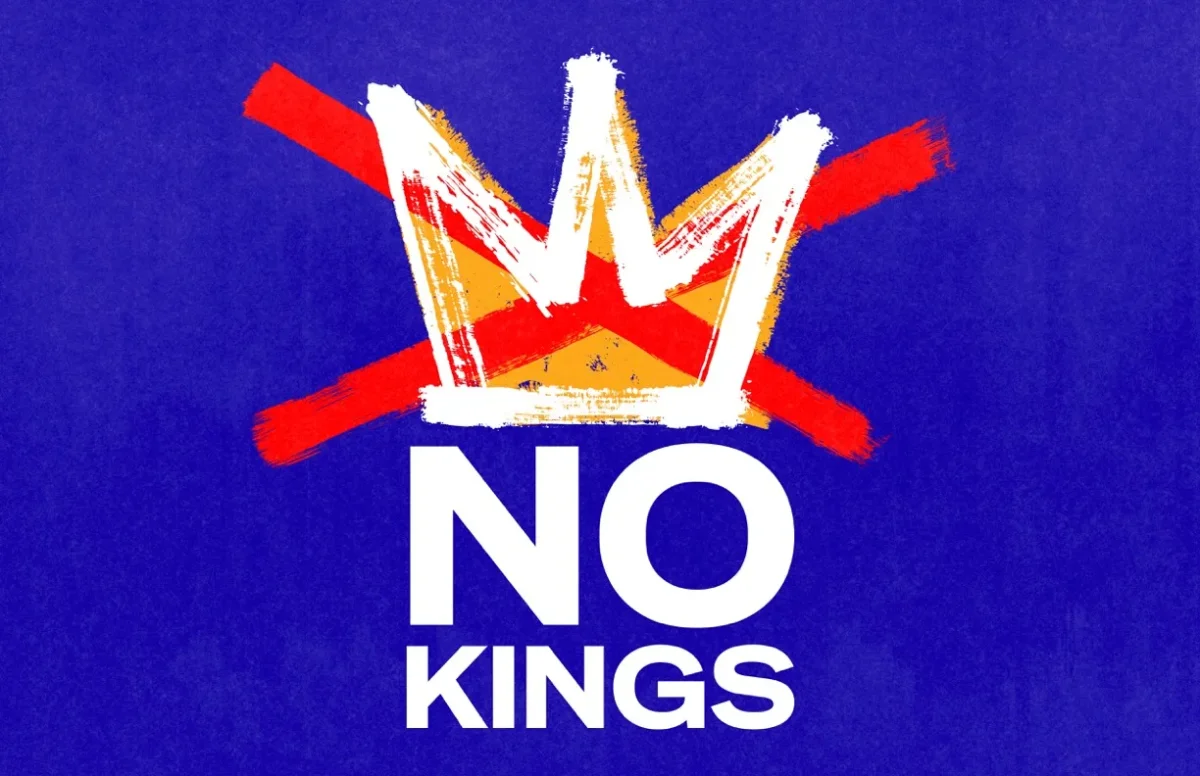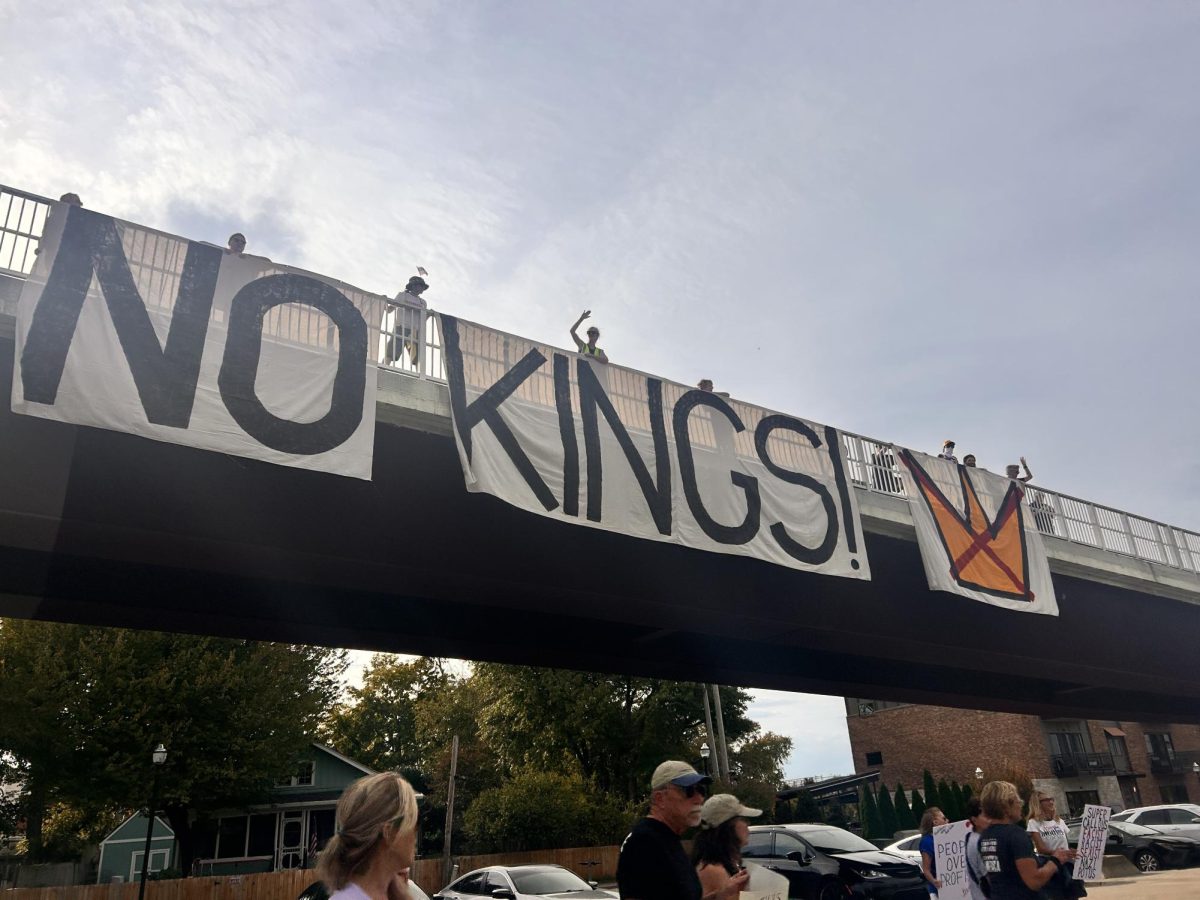
It was a warm, sunny Saturday afternoon. The kind of day that high schoolers usually spend hanging out with friends or relaxing at home. For a few students, however, this wasn’t just another weekend. It was October 18, the day of the second large-scale No Kings protest this year.
“The rally was basically to protest the policies and actions of the Donald Trump administration, including his alleged fascist tendencies,” sophomore Adysen Smith said.
Smith has attended several events protesting the actions of the Trump Administration, prompted mostly by her own family’s experiences with the U.S. Immigration and Customs Enforcement, or ICE, w
ho, according to the American Immigration Council, have increased the number of people detained in ICE facilities by 50% in the past year.
Sophomore Tess Chrisman also attended a No Kings rally in Jeffersonville. It began in the NoCo Arts and Cultural District at the corner of Spring Street and Court Avenue, and then processed around the block, coming to a head under the Big Four Bridge.
“I felt like it was important to support this because if we don’t do anything, then we’re basically just saying, ‘Yes, go ahead!’. We’re basically just giving consent,” Chrisman said
For all her strongly held views, Chrisman was still a little nervous when the time came to head to the protest.
“I actually was a bit scared to go, I was worried there would be a shooting or something. When I got there, though… It was like we were just hanging out together in a park with some signs. And it was just such a good community,” Chrisman said.
Country-wide, there were No Kings rallies in some 2,700 locations, with an estimated turnout of just under 7 million attendees, making this one of the biggest single-day protests in American history. Indiana hosted 44 protests in places like Indianapolis,
Fort Wayne, Evansville, and South Bend. At the Jeffersonville event, which ran from 2:30 to 5:00 p.m., several hundred people showed up.
“One thing that stood out is, like, on the internet it always talks about how negative [protests] can be, and how badly they can go… but it was really peaceful and it was really a good protest,” said Smith.
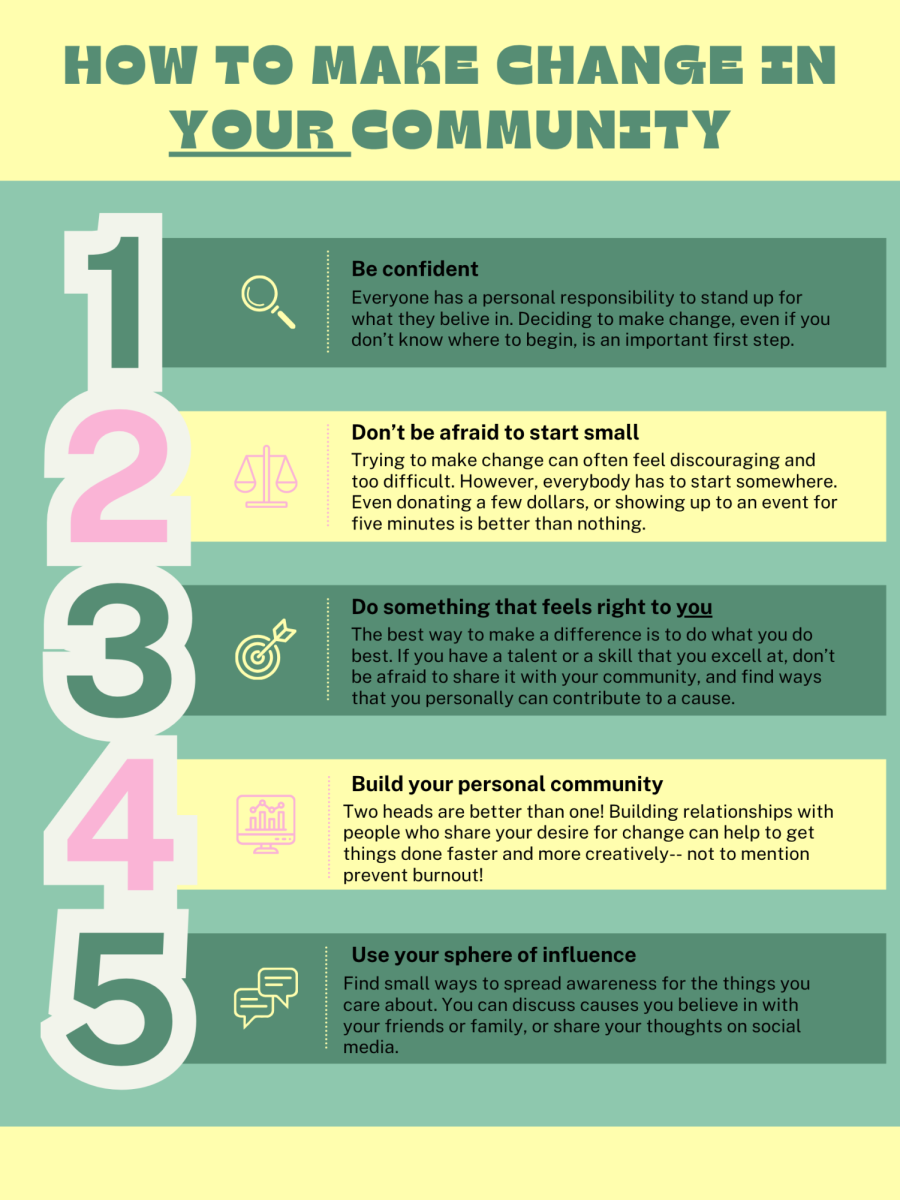
Chrisman’s advice for getting over feelings of anxiety or stress before a protest was simple: “If you feel nervous about it, start with a smaller thing and then you can slowly build your way up to going to things like a rally or a protest… I think if you choose never to go [to a rally], it’s good that you’re still believing in that, but just know that the more people that actually do something, the more it’s gonna actually affect [change].”
Even though trying to stand up for your beliefs as a young person can be anxiety-inducing, Smith and Chrisman are far from the only teens fighting for social justice. According to American Student Assistance, 9 in 10 Gen Z respondents said they are passionate about social causes, and a third of 13-17 year olds defined a successful career as one that would help to support positive change in their community.
“It’s really hard for someone my age [to make change], but basically I just keep going to protests and trying to get my voice out and heard,” Smith said.