Is buying a trendy $10 outfit really worth causing environmental harm to the Earth and significantly exploited labor? Buying from cheap “fast fashion” websites can be very tempting, but after purchasing a low-price haul of low quality clothes, you should ask yourself, “When was the last time I wore everything I own in my closet, and where does it all really end up after donating it?”
Fast fashion is a company’s strategic way of replicating recent trends, usually popularized from social media or pop culture, and is mass-produced at a low cost, rapidly bringing the clothing to retail while demand is at its highest. It has gained a huge amount of relevance in the past decade.
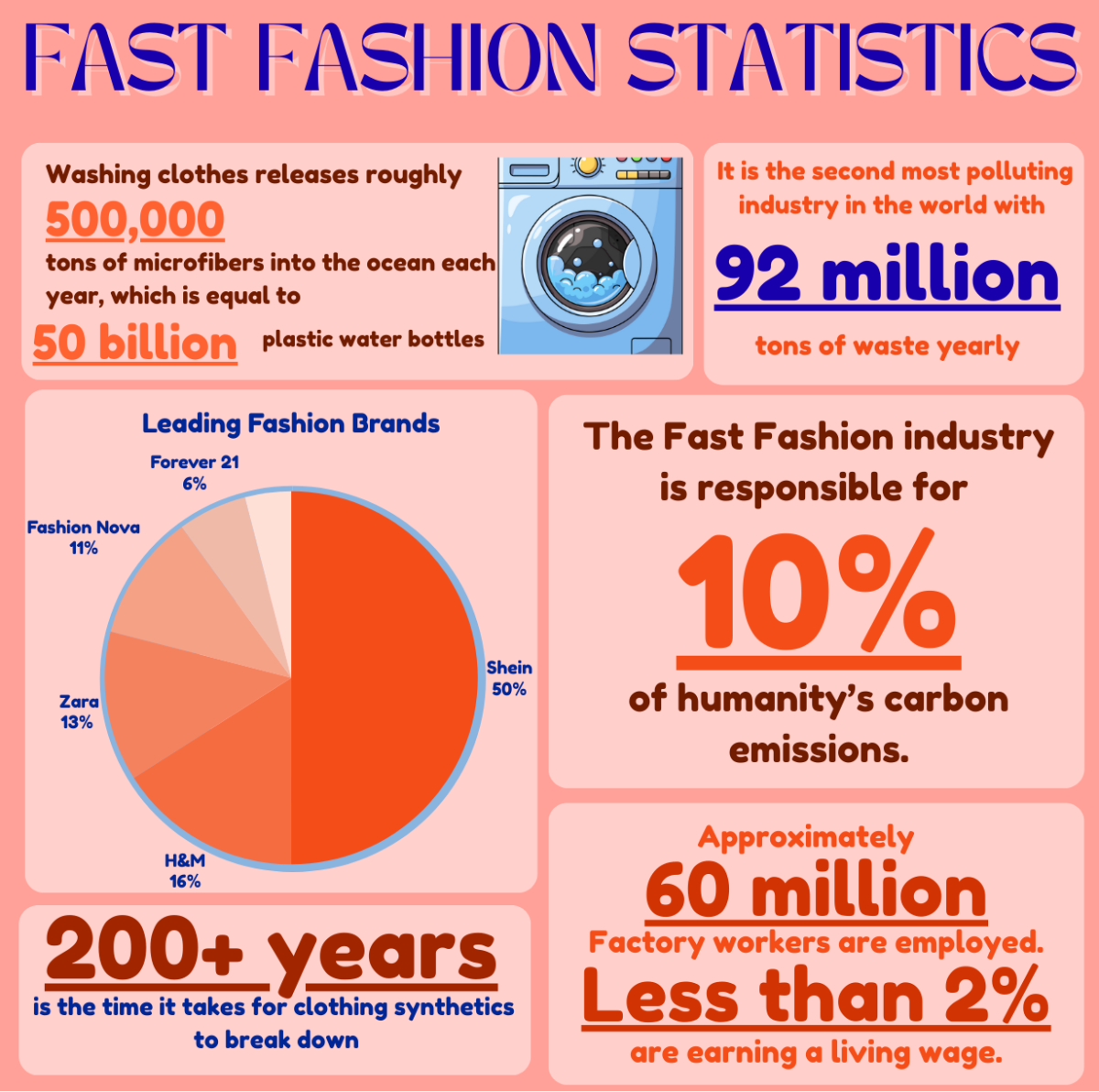
Brands such as Shein, Zara, H&M, Forever 21, and Fashion Nova are enticing people to constantly buy clothes, to the point where it has created a cycle of overconsumption. This is because people tend to have a fear of missing out on trends on social media, and as a result, these companies are pressuring people to quickly purchase the latest outfits, causing a large amount of textiles to go to waste.
Each year, millions of tons of clothes are produced, worn, and thrown away. According to The Ellen Macathur Foundation, every second, the equivalent of a garbage truckload of clothes is burnt or buried in a landfill. Even clothes that aren’t donated and thrown away are also contributing to the environmental impacts. Washing clothes releases roughly 500,000 tons of microfibers into the ocean each year, which is the equivalent of 50 billion plastic water bottles. Some may believe that this is not a primary concern, but The Public Interest Network says that because our marine life is ingesting the toxins from the microfibers in our clothes, they can end up in the seafood humans eat, causing potential risks to human health. 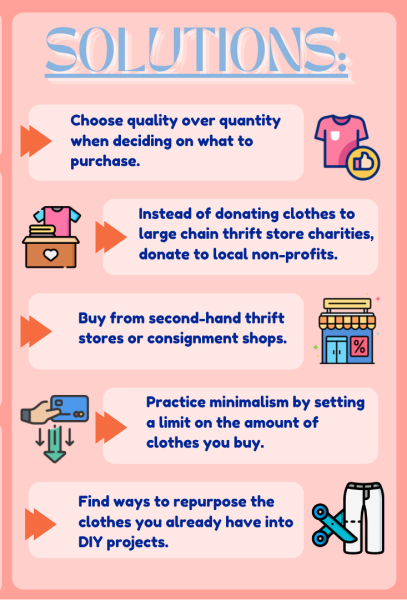
In addition to these environmental impacts, fast fashion also has effects on the workers that manage the production of the clothes. Millions of employees are working around 16 hours every day and making a very small amount of money. Most clothing factories are located overseas, including countries in Africa, South America, India, and Asia, where workers have very few regulations against unfair wages and working hours. These industries are not just depending on their labor, they are ignoring their rights. Approximately 60 million factory workers are employed, and yet less than 2% are earning a living wage, according to Earthday.org. These workers are primarily women. They are often working in unregulated factories where their workplace is not respecting their rights, and are causing verbal and physical abuse to them.
Many people, especially lower income individuals, may think that buying from fast fashion companies is their only solution to getting affordable apparel, but there are many ways people can acquire affordable clothing while keeping the Earth clean and supporting overworked employees. Shopping at thrift stores or consignment shops is a great alternative to fast fashion companies. Purchasing clothes from people that sell second-hand items online can also be a good substitute for fast fashion. Below are some more local and beneficial ways of buying clothing while supporting sustainable fashion.
Goodwill Industries
GoodWill is a non-profit thrift store with two locations in New Albany and one in Clarksville. It is funded by donations sold in store and online. Not only do they sell affordable clothing and home items, but it is also a way for people to find jobs with free career counseling. Goodwill uses the money from their sold donations to fund programs that help people find jobs, get education, and build communities.
Mariposa Consignments
Mariposa Consignment is a shop located in downtown New Albany. It is known for its stylish selection of second-hand women’s clothing, accessories, and shoes. They also sell a variety of prom dresses that are often featured on their daily posts of “Prom Dress of the Day” on Instagram. Shopping at Mariposa is a great way to find unique and higher quality brands and formal wear.
The Mustard Seed
The Mustard Seed is a local thrift store located in Clarksville and Floyds Knobs, that has been planted to help Christain organizations that support the healing and prevention of childhood sexual abuse and a gateway for survirors to seek resources. They sell a wide variety of donated secondhand clothing, books, housewares, and toys.
Dress & Dwell
Dress & Dwell is a women-owned boutique located in Downtown New Albany that sells mostly women’s clothing along with unique home decor and chic accessories. They are lauded for their welcoming staff and provide a variety of casual outfits and formal outfits for special events. Buying from a local boutique offers a chance to support the local community.
Plato’s Closet
Plato’s Closet is a retail franchise located in Clarksville that promotes recycling clothes and reducing the waste of clothing. They buy and sell gently used name-brand clothing, accessories, and shoes. They primarily target teens for affordable and trending fashion. Buying from Plato’s closet lets sellers freshen up their wardrobe sustainably while getting paid.