Most people see art as a hobby. For students studying Fine Arts at NAHS, however, it’s more of a lifestyle. They spend their school days learning about art, music, and theatre with their peers, and after school they head to rehearsals and extracurriculars. Even their weekends are often spent at shows and competitions, and many of them plan on using the skills they learn here in their future careers.
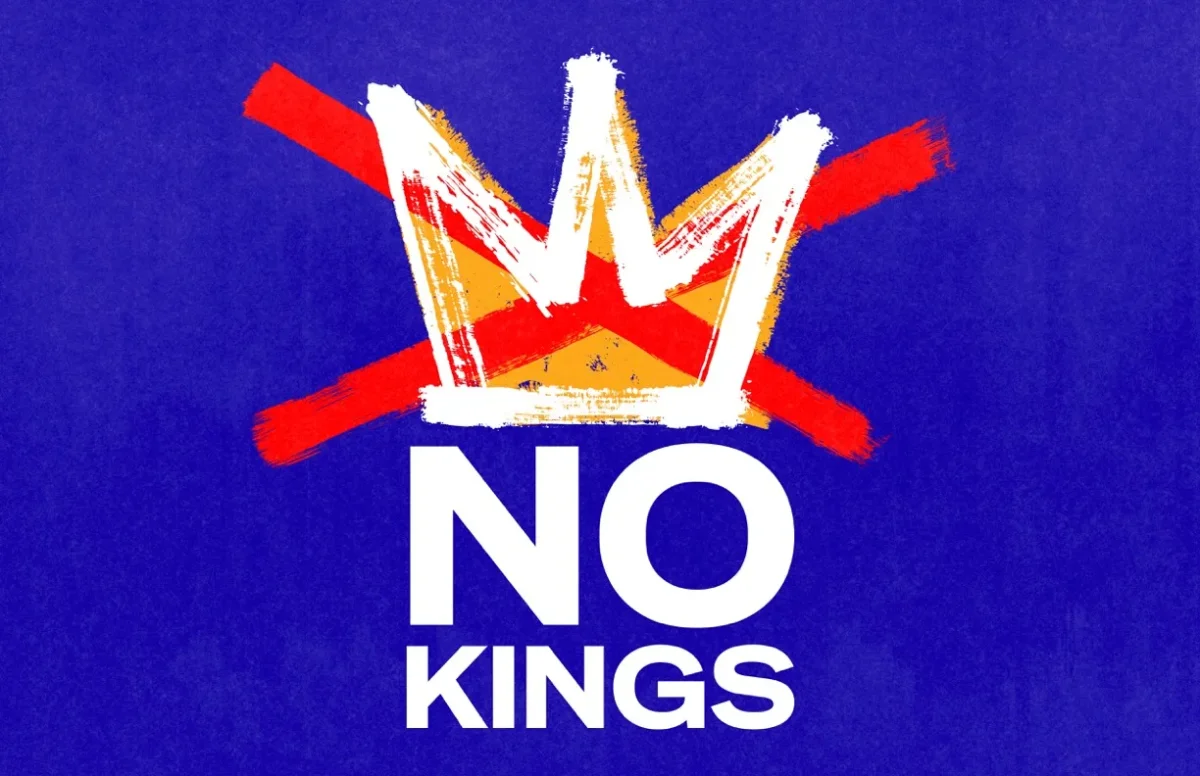
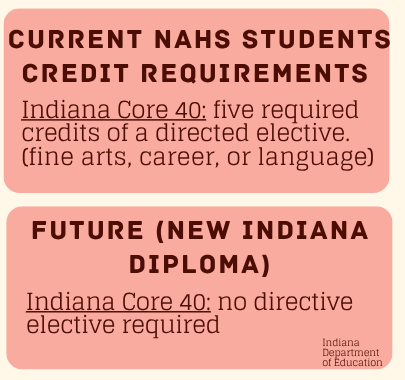
However, a new piece of Indiana legislation struck a blow to the subject. Beginning with the Class of 2029, a new high school diploma is pushing Indiana public schools to focus on more “practical” courses featuring required work hours. In doing so, the diploma is pushing students away from the arts by no longer requiring a Fine Arts credit to graduate. This could lead to decreased participation and funding, and eventually to such departments closing altogether.
Despite the new rules, many students at NAHS are fiercely protective of their art communities. The now-annual Fine Arts Showcase, which happened for the first time on Wednesday, April 15, was entirely student-led. Many of the speakers sung the praises of the arts’ involvement at the school. They spoke passionately about the friends made, skills learned, and dreams fulfilled by such programs. For a subject deemed irrelevant by the state, students from every department sure had a lot to say on the matter.
Tech Theatre
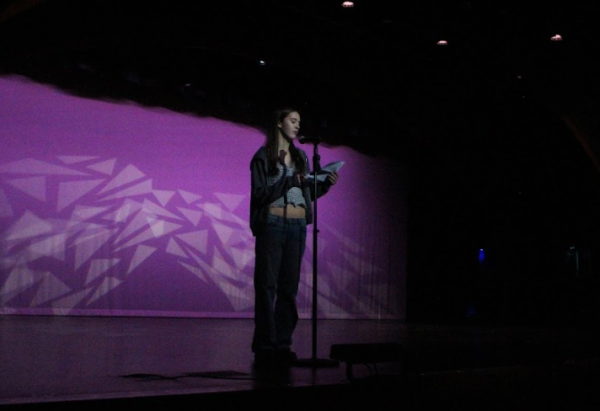
Sophomore Penny Ferguson is busy, busy, busy. She has been involved in Theatre Tech for years, and it’s not an easy feat.
“As stage manager, my jobs at rehearsal include taking attendance and making sure everyone is where they need to be, taking notes and blocking for future rehearsals, helping actors with their lines, playing music, moving small set pieces for rehearsal, and locating rehearsal props,” Ferguson said.
She has been a part of the Tech Theatre team since middle school, but her interest in the subject started even earlier.
“I first heard about it when I was in second grade and I came to the theatre camp here at NAHS,” the now- stage manager said.
That second grader probably had no idea what a big part of her life theatre tech would become. Now, she dreams of taking it even further.
“My dream is to become a professional stage manager on a broadway tour,” said Ferguson. “I’ve also thought about using my skills to work on movie sets, special events, or concerts.”
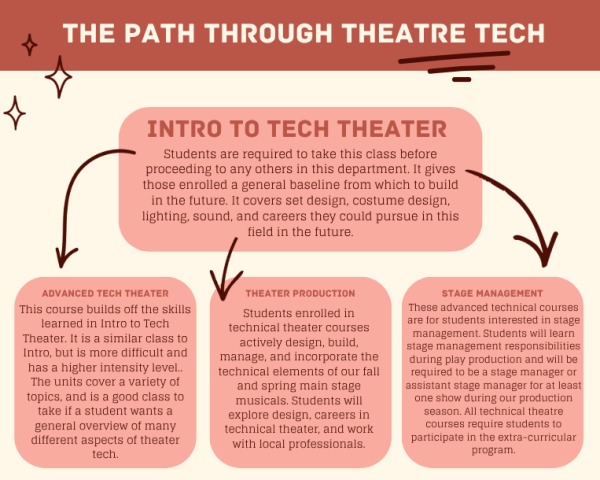
Stage manager is only one of many routes that Tech Theatre students can take, however. The department offers classes that focus on a variety of topics and techniques, and aim to give students a general baseline from which to build off of.
“They offer intro and advanced tech classes which teach you the basics of pretty much all technical elements,” Ferguson said. “[Students] also get opportunities to help with the actual mainstage shows NAHS theatre puts on every year– there is also a stage management class that goes more into the specifics of being a stage manager and what that job requires.”
One major thing all of the Tech classes have in common is their dedication to instructing students on how to operate equipment, learn their way around backstage, and, most of all, work with their peers toward a common goal.
“Fine Arts and tech theatre specifically have not only taught me skills in the arts, but also communication, teamworking, and responsibility,” Ferguson said.
Now, Ferguson and the rest of Theatre Tech are paying it forward with their participation in the Fine Arts Showcase, which was hosted by the NAHS Fine Arts departments this past Wednesday. The Tech booth featured a full staff of tech students, who were eager to talk about their experiences, complete with props from past shows and flyers for possible recruits.
“Also,” said Ferguson, “we organized a crew of technical students to work transitions backstage, spotlight our student speakers, and make sure everything runs smoothly.”
The goal of the showcase was to raise money for the fine arts, and to hopefully draw interest to the subject, especially in the face of looming budget cuts.
Events like this have been notably successful at drawing in new talent in the past, and Ferguson is hopeful.
“I am hoping that people will feel more inspired to try out technical theatre with the knowledge of what it is and how it can aid your daily life,” she said.
“My advice,” she added, “is to not put yourself into one area and only try out one aspect of it. There are so many different areas to technical theatre and ones that you might not know you enjoy until you try them so really try to broaden your horizons!”
Radio
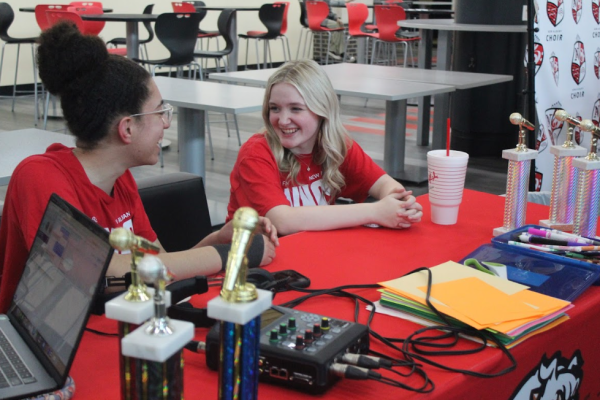
Riley Frakes has always been interested in broadcasting, so it only natural for her to join Radio in her freshman year.
“I had heard really good things about it from a lot of upperclassmen, and some of my friends, and I knew I was interested in broadcasting and media because my dad works in sports media. So I wanted to be involved and find something that interests me rather than taking another required class.”
Now, as a senior, Frakes is poised to take the next step.
“I’m going to college to study strategic communications, which is all the different aspects of broadcasting, media, and journalism,” Frakes said.
She has been involved in Radio for four years, and has recently stepped up into a leadership position as the department’s representative for the Fine Arts Showcase.
“It just made sense for me, what with my involvement and dedication, as well as being involved in a couple of the other arts programs, too,” Frakes said.
The showcase, which was initially thought of by a couple of students, has been mostly student-led, with little direct intervention from teachers.
“I think I have a good understanding of how I want our program to be represented,” said Frakes. “I think I just want [the Radio Department] to be shown in the best way, and to encourage people to take our classes and be a part of something. We also want to help showcase the other departments and what they’re capable of, too.”
Frakes feels passionate about the department and the relationships she has gained through participation in it.
“I’ve been really lucky to have gained two of my closest friends through Radio. My sophomore year, my friend Jenna was in my class. Her and I had known each other…but we were in that class every single day and it was a really good bonding experience for us.”
The experience has even shaped her into a stronger leader as she has been able to pass along her experience to younger students.
“In my junior year, I had my friend Paisley in [Radio class], and she was younger than me, so it was like, Jenna was an example for my sophomore year, and then I got to be that example for somebody else in my junior year.”
The Fine Arts Showcase, though open to everyone, was particularly focused on students who will attend NAHS in the next few years, with organizers sending fliers to middle school teachers to distribute amongst their pupils. Frakes was optimistic about the visiting middle school students.
“I used our Harvest Homecoming booth as inspiration, and I tried to come up with things that would get people’s attention,” said Frakes, “we’re gonna have a little craft, which we do every year at the beginning of the year, because we want people, especially eighth graders who are gonna be taking the class throughout their time in high school, to get a fun little hands-on experience while at the showcase.”
Craft table aside, the demonstration at the Radio booth also included records, vinyls, and a showcase of the international broadcasting system awards that the department has won throughout its many decades of operation.
Frakes added that, while she had learned everything from podcasting to video editing in the course of her study, her advice to people looking to participate in Radio was simple.
“Be yourself. You get a lot of opportunities to do things that cater to your personality through radio shows, through podcasting, even through broadcasting – don’t try to be someone else, just do your own thing and be yourself, because that’s gonna get you much further.”
Band
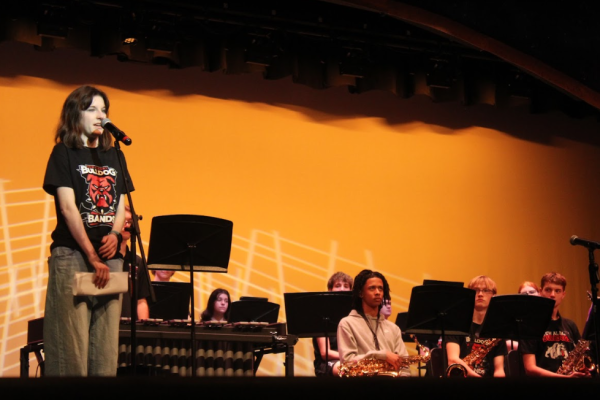
When senior Jayla Ritter joined Band in middle school, it was strictly to fill a credit requirement
“I’ve been in Band since fifth grade, but I only joined because I had to choose an elective, and my dad did Band, so I decided to do it too.”
Now, eight years later, her view on the subject has changed considerably. She now holds a leadership position in the department and is Band’s representative in the Fine Arts Showcase.
“We really want to get more people involved and to help people realize how big of a program it is,” said Ritter.
“At the booth, we have flyers for next year, with the pathway and graduation. The Jazz Band’s also gonna be playing in the auditorium.”
The organization process for the Showcase was notable not only for the mission behind it, but also due to the fact that it was almost entirely student-organized.
“It’s kind of getting repetitive cause we’re like, ‘we need to do this,’ then we do it, and then it’s like, ‘that wasn’t good enough, so we have to try again’. We’ve had to reset the date so many times, but it’s April 15th for sure now,” Ritter said, adding, “The arts teachers have been helpful, and I’m in Ceramics, too, so Ms. Schotter has been helping out a lot.”
Despite the Showcase’s chaotic inception, the event was run smoothly, and the Jazz Band’s performance was capped off with a speech by Ms. Ritter herself, who spoke out against Indiana’s recent shift away from the arts.
The new credit requirements no longer necessitate that students take an art class. On the surface, this may not seem like a big deal, but if the fine art departments see a lower rate of participation, then they run the risk of losing their funding, or even getting shut down for good.
“I think it’s kind of dumb… participation in the arts has been kind of dwindling,” said Ritter. “I also understand, though, because I feel like it’ll encourage people who really want to be in Band to stay with it.”
Ritter and the rest of the Fine Arts students are optimistic that events like the Fine Arts Showcase can really help to expose Band and other arts departments to a new audience.
“We’re hoping for lots of new members, more people interested in it and being able to see how it works… a lot of middle schoolers, hopefully.”
From the atmosphere of the showcase, it was apparent that students involved in NAHS arts programs are a tight-knit group, with many students showing up and staying for hours just to watch all their friends get a turn in the spotlight.
Ritter was quick to agree with this assessment.
“A lot of people in Band are really good friends,” she said, “it’s kinda cheesy – we’re like one big Band family.”
Even after graduation next month, Ritter’s journey with Band isn’t over. Alumni from NAHS arts programs frequently stay involved with their high school community, and Ritter plans to pursue her passion further.
“I want to be part of the marching band at the college I’m going to, and hopefully I’ll be in Band there, too.”
Ritter and her fellow students know that there are a multitude of advantages to being involved with a group like Band.
“You get into all the basketball games for free,” she said, “but also, you get lots of friends. I have a good group of friends I’ve known forever now because of Band, and it’s fun being able to go out after all the concerts and having fun with my friends.”
Visual Arts
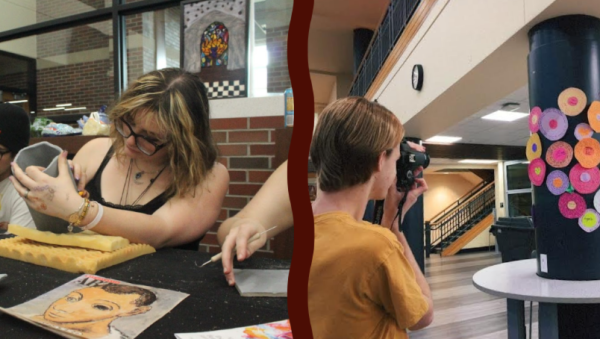
Sophomore Bella Watson-Smith is in her second year of art class at NAHS. She started her freshmen year in Intro to Art, and worked her way into Ceramics this year. Watson-Smith grew up in a family of artists and is well acquainted with the art-environment.
“I think that promoting art as much as we can is super important,” Watson-Smith said, “especially to prevent losing the programs, and it’s such a huge form of self-expression– I’m really passionate about it.”
This showcase originated in the Theatre program, the organization began with junior Dashawndre Wright and senior Ruby Laffin. Once they began the planning they made sure to get each other department involved.
“Dashawndre [and Ruby] set up an email and sent it to all the teachers,” Watson said, “and had the teachers send their reps or the presidents of their departments. Then we all met up and figured out a base plan. It was entirely student led and students planned everything.”
The arts are a very crucial part of sophomore Ellis Smith’s life as well. Being involved in Tech Theatre and Photography as well as the 3D arts, he is surrounded by art all throughout the day. In the 3D arts category, NAHS offers ceramics, jewelry making, fiber arts, and intro to 3D arts.
“[The arts] matter,” Smith said, “because with 3D arts, you are challenging yourself in a way that’s different from typical academic challenges. It makes your brain think more and it’s fun to work with your hands more.”
As the requirements for Fine Arts education decrease, so do student’s opportunities to explore new creative outlets. This comes as a hard blow to Smith, who found his dedication for the arts through a required class.
“It started out as a required class,” Smith said, “and then in middle and high school I just enjoyed it. So I decided to keep doing it and trying new things.” 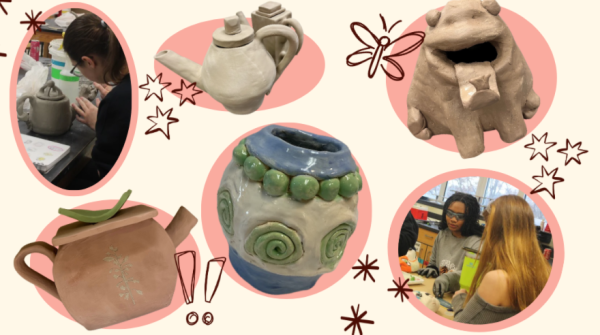
Ceramics class offers Smith and Watson-Smith a joyful escape from their work-centered school environment. This hands-on environment transforms their mindset the moment they walk through the door
“Everyone [in Ceramics is] pretty chill,” Watson-Smith said. “We all inspire each other, and if someone in class needs help they can always ask another student. It’s very student-centered.”
“It’s really fun because,” Smith said, “while we do have projects, you can be creative and do whatever you want with them and try new things. Afterwards, if it doesn’t work, you have time to redo it. There are very few super hard deadlines you have to meet.”
With all of the honors and AP classes that are required to graduate with an honors diploma, even current students have found trouble fitting an art class into just one of their seven periods.
“[Art classes] challenge your mind in a different way,” Smith said, “Some people might not see the advantages of learning science, or learning social studies if they don’t think they’re going to use them. But, hands-on things like that are very helpful even if you don’t immediately recognize it.”
“ I think for me personally,” Watson-Smith said, “it helps me focus in other classes, especially if you have it early in the day, because it puts you in a kind of flow state. It definitely expands your mind in general, and it helps you to feel your emotions and be able to put your emotions into your artwork.
NAHS Fine Arts thrive on encouraging each other. Each department is interconnected through the passion of their art. Both Smith and Watson-Smith extend support to their own classmates in different Fine Arts departments, such as Theatre.
“ I love theatre,” Watson- Smith said, “I’m not a theatre kid, but I love watching their performances and stuff, and I think their performances are gonna end up really cool, because the shows and demonstrations are what’s gonna bring people in.”
“I’m excited for all [of the departments] demos,” Smith said, “but I am excited for theatre because I’ve recently begun doing Technical Theatre. So, that’ll be fun and I’m just really excited for all of them.”
Theatre
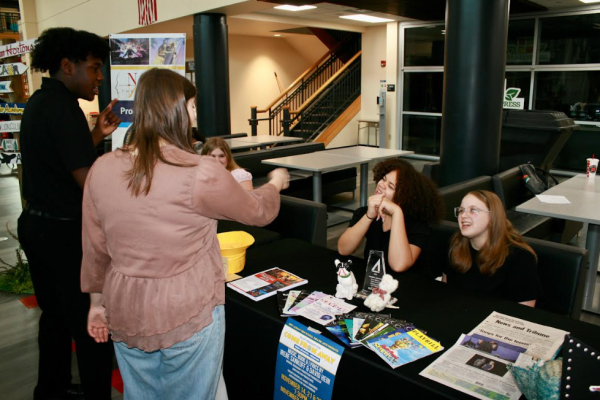
During just the fall season, a student involved in NAHS theatre will spend roughly 16 hours each week in rehearsals. This is nearly the shift of a part-time job! To pull this off, each student must be dedicated to their craft.
Junior Ella Kennedy has been involved in theatre since the fall of her eighth grade year (roughly four years), and this is her third year in NAHS’ theatre program. NAHS offers three different theatre classes. Intro to Theatre Arts, Advanced Acting, and Musical Theatre. Kennedy has taken the intro class and is now in her second year of Musical Theatre. She is currently the head of the events committee on the NAHS thespian board.
“I actually didn’t even want to [join theatre],” Kennedy said. “I was forced into it by my old voice teacher, and I ended up loving it and continuing to do it.”
Students involved in theatre get to know each other very well. During particularly taxing shows, students involved in theatre are around their castmates every day of every week
“[Theatre] is very supporting, loving, and kind,” Kennedy said. “Everyone in there is always so nice and they’re always so great to be around. You build relationships that you’ll keep forever. You just become so close and such a tight-knit family, and it’s amazing.”
NAHS’ Theatre program is both locally and nationally recognized, and often referred to as an anchor in the community. The program is also held in high esteem within the school.
“[Theatre] has given a new perspective,” Kennedy said, “to people who might not normally see shows. I think I’ve seen more people come to shows from the school, and they’re like, ‘wow, [these students] are actually really talented and you can tell that they’re close.’ I’ve even heard people say, ‘this is why no one makes fun of our theatre department, because they’re actually good… and I want to be a part of that.’ We’ve had more people join because of us as a whole.”
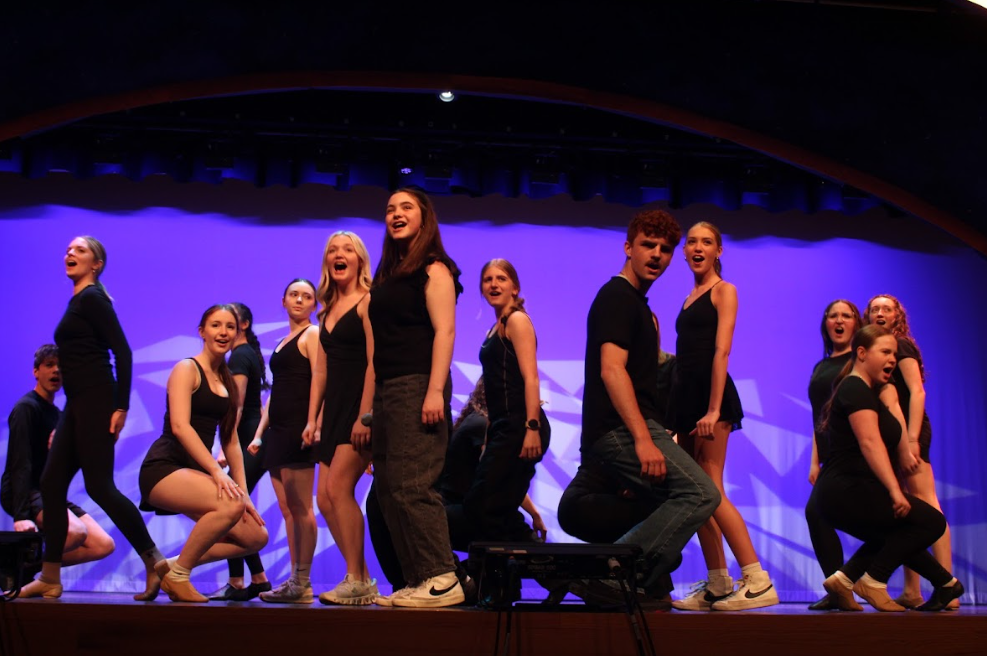
For Theatre’s demonstration, they pulled from their two first shows of the season, Come From Away and Newsies. These shows have not been on the stage since their fall season.
“We are performing Seize the Day from Newsies,” Kennedy said, “which was our pre-fall show. And then we’re also doing Come From Away, which is our fall show. We’re doing one number from each. At the booth, we’re just going to be talking about theatre and what it has done for us.”
At the head of the Theatre Department, director Ms. Amanda Simmons, is now in her third year teaching at NAHS. Students and teachers alike feel that she has transformed the department as her ambition goes above and beyond to improve NAHS Theatre.
“She works really hard to build connections with each student,” Kennedy said. “She is always there. For seniors going into theatre, maybe it’s her getting a Zoom call with someone who has done that before, or helping you with scholarships. Even if you’re a freshman or underclassman, just being there and supporting you. She tries really hard to make sure that you know you’re loved.”
The musical theatre class here at NAHS is split into two class periods. Sixth period musical theatre has been a constant in Kennedy’s routine for the past two years.
“Mondays [in musical theatre class],” Kennedy said, “we’re working on a scene that we have chosen from our fall show. Tuesdays, Wednesdays, and Thursdays Ms. Simmons has gotten us voice lessons, so we’re in different groups for that also. Then on Fridays we work on our Cabaret performances.”
None of the arts departments could continue to thrive without the support of their communities. NAHS arts largely depend upon the city’s support.
“We want to show off,” Kennedy said, “why people should continue to support the arts and why a large amount of people should continue to see the shows and support us because it’s a great program to be in.”
Orchestra
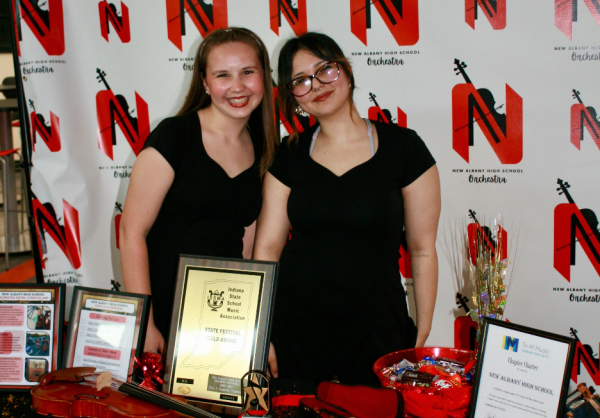
From strings to woodwind, students in NAHS Orchestra are getting a myriad of experience in music. This program is award-winning and shared that talent at Wednesday’s Fine Arts Showcase.
Senior Sam Wilson has been involved in orchestra classes for nine years. Orchestra offers three distinct class levels: baroque strings (beginning), concert orchestra (intermediate), and chamber orchestra (advanced). Wilson plays the violin in chamber orchestra.
“I got into orchestra,” Wilson said, “just because I needed something to do, but once I was in, I realized that it was something that I wanted to continue all the way until I graduated. That was because I formed a good community.”
According to a recent World Health Organization report, “Art therapy and engagement with the arts have been shown to reduce symptoms of depression and anxiety, ease pain, and help people heal from trauma.” Wilson reinforces this claim with her own experience.
“It is important to highlight the fine arts,” Wilson said, “so that people can find passion within their lives for something other than their phones. It’s something that is beautiful and means a lot to that individual.”
While each day in orchestra classes brings a new experience, Wilson shares the general outline of a day in NAHS’ chamber orchestra class.
“When we first walk in,” Wilson said, “there’s a timer on the screen for five minutes after the bell rings. In that time, we get out our instruments, we unpack, we tune and put rosin on our bows, warm up our fingers, get our music out, and then once the timer rings it’s time to start. Miss Lane gets up on the podium and she has us tune all together and individually. Then most of the time she’ll have some kind of rhythm exercise. After that we go through our pieces one at a time. Either we focus on one piece the whole time, or we run through all of them and start and stop. We pack up around 2:20.”
Orchestra classes can at first seem intimidating to join. Nonetheless, the reward of sticking it through will overpower any initial anxiety of joining.
“[Joing Orchestra] might be a little scary at first,” Wilson said, “because Orchestral instruments are kind of more delicate than other instruments physically, and it’s harder to get started playing because there’s no frets on the instruments. It’s all about finger tape and memorization, and it’s hard, and it’s challenging, and it’s difficult, but just keep pushing. Keep trying and who knows. It’ll be worth it.”
This Wednesday Orchestra put on a wonderful performance of the songs they’ve been working on most recently.
“For our performance,” Wilson said, “we are doing two of our pieces that we’re doing for our concert. Our concert is, we were doing two pieces from this cycle; Momentum and March Slot. Then we have a student speaker, Chase Thomas. He’s going to talk about the importance of the Orchestra, all of our classes, and why people should join.”
For an Orchestra to act as a functional ensemble, each student have to know how to work together for their music.
“The relationship between the students is very important in Orchestra,” Wilson said, “because the teacher isn’t really teaching, per se. She teaches us the pieces and what we should do better, but all of it is us playing. She’s not doing the work, we are. So specifically section leaders, like the leaders of the violin 1’s, the violin 2’s, the violas, cellos, and bass, everyone has to be completely in sync with each other in order to lead their sections.”
For the past few years Orchestra has shown their resilience as a department, having been through several different teachers in just a few years. The Fine Arts Showcase may help to strengthen their department even further.
“I hope that we can have new members,” Wilson said. “We’re kind of dwindling in numbers recently, especially with having so many changes within our teachers. We’ve had three different teachers within this year plus last year. It’s been really hard for us to find a steady grounding. I’ve heard some people say that they’re leaving this year, or next. We need more people or else our department is going to collapse. So, join Orchestra. It’s really fun and Ms. Lane is really nice!”
Choir
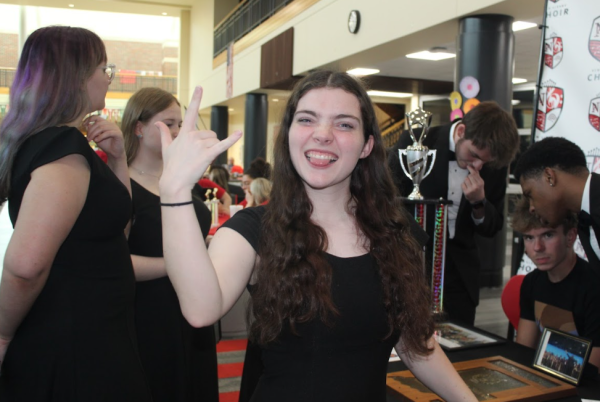
Years ago Sir Paul McCartney shared his sentiments towards Choirs everywhere, “I love to hear a choir. I love the humanity… to see the faces of real people devoting themselves to a piece of music.” Carrying on the choral tradition, NAHS choir sang their hearts out at NAHS’ first annual Fine Arts Showcase.
Senior Lizzi Gatewood has been involved in choir for about eight years. Four of those years have been in middle school choir, and four at NAHS. NAHS offers a multitude of choir classes, such as, beginners women choir, mens choir, advanced choir, and intermediate choir. Gatewood is the president of the advanced choir.
“I come from a family of singers,” Gatewood said, “so [choir] was just natural for me to enjoy.”
Choir has been rehearsing their showcase performance for weeks. As each of the performing arts departments, the choir performed as well as being represented in the lobby with their booth.
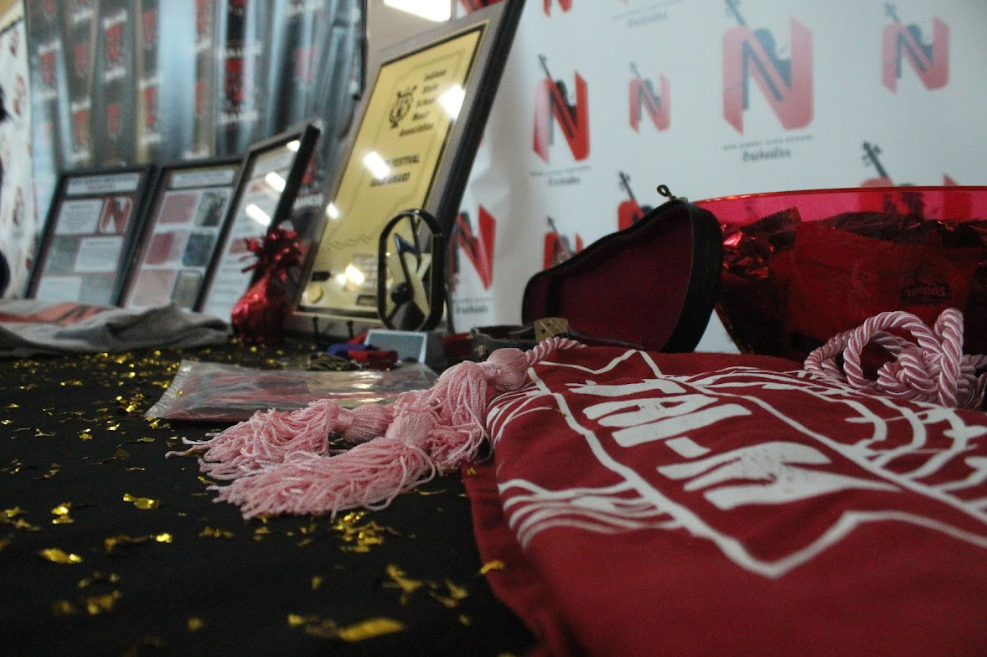
“We are going to sing three songs,” Gatewood said, “Clothes of Heaven, Go Tell it On the Mountain, and Magnificent Horses. I’m going to have a speech beforehand talking about what those songs mean. The booth is going to showcase all of the events we do, like Music in the Parks and the retreats we go on. It’s also going to show off some trophies, medals, and we’re going to have some flyers.”
This event has been organized by roughly 15 students. The absence of adult guidance has sprung issues of its own.
“It’s been difficult to figure out dates,” Gatewood said, “and to get everybody together. It’s also been pretty difficult to keep everybody on track, like ‘who’s going to do this, who’s going to do that.’ The way that we’ve really tried to keep organized is by constantly messaging each other, reminding each other of things. That’s all we really can do.”
One constant throughout each Fine Arts department is the ability to find a community. A common interest in the arts creates a familial environment that is conveyed through their art.
“We’re a lot like a family,” Gatewood said, “Mr. McCoy does get a little angry occasionally, but it’s a loving kind of anger. He wants us to do well. It’s really good that students feel comfortable enough to tell him when they have a problem, or when they’re upset, because he’ll always be there.”
NAHS is made up of so many different departments. Each makes NAHS what it is, and contributes to the school’s environment as a whole.
“[Choir] has really helped some kids feel more comfortable in New Albany,” Gatewood said, “because choir is filled with a lot of outcasts, and I think by having that kind of family dynamic [in choir], it’s really helped them fit in a lot more.”
This showcase is an excellent opportunity for Choir to grow as a department. As the president, Gatewood has pondered this growth.
“I’m hoping,” Gatewood said, “choir can get out, what we need to learn on these songs, and what we can improve going forward for Music in the Parks.”
Joining a music or Fine Arts class, such as choir, is known to make an individual a more well-rounded person. Choir-taught skills such as rhythm can be used in every-day life.
“[Choir] will help [people] with a lot of things,” Gatewood said. “For example, the rhythm and stuff. When you’re singing a song in the car and your rhythm is off, yeah, whew. [Choir] will help a lot with that.”
With the coming diploma changes in Indiana, each department has put in their own efforts to maintain enrollment and kept their art afloat.
“It’s important to highlight the fine arts,” Gatewood said, “because they got rid of it on the diploma . So now kids aren’t going to take it, we need to find another way for kids to want, like, an incentive. And so we’re trying to open it up more that way.”